Biography
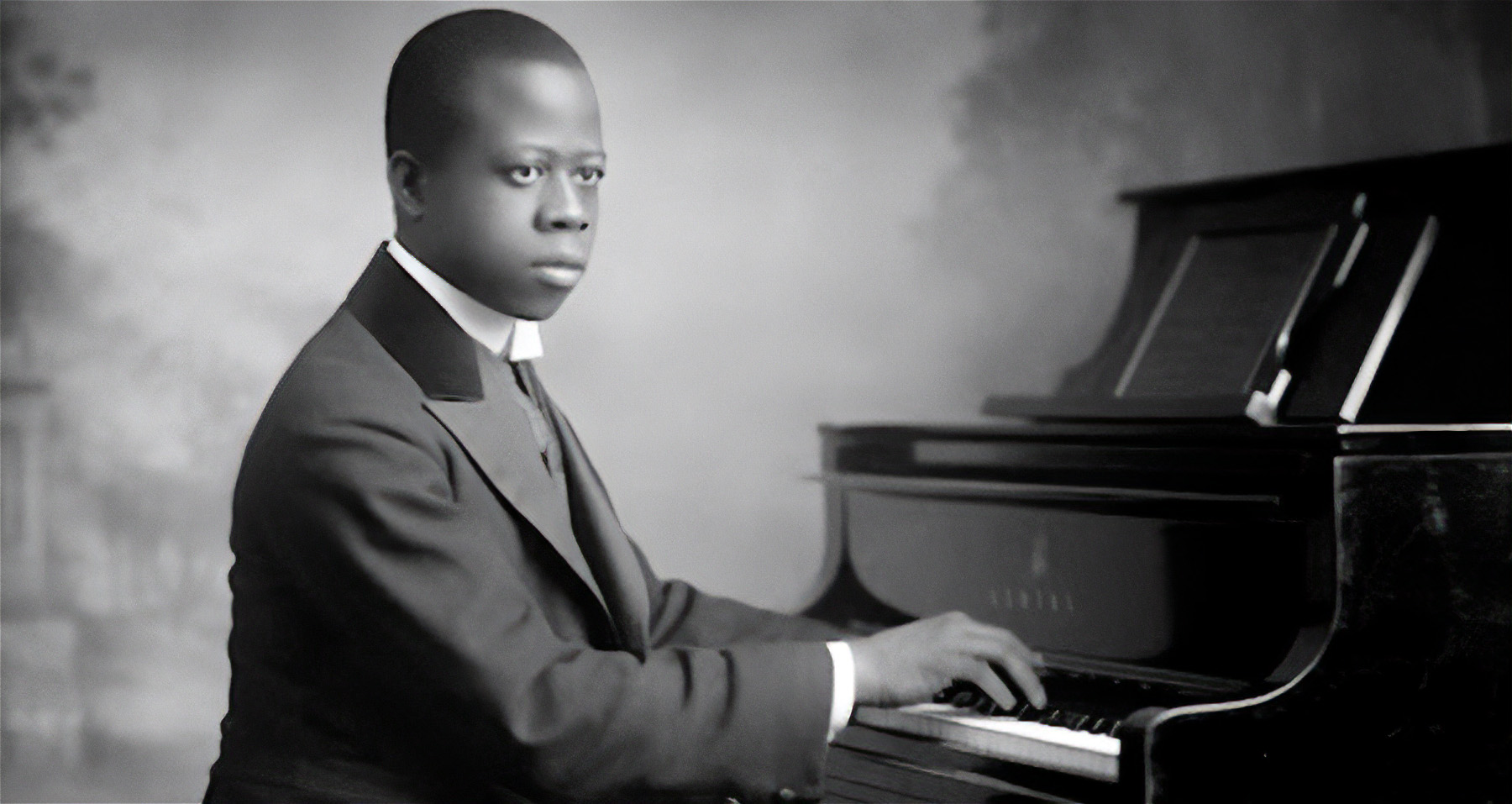
Scott Joplin, universally regarded as the foremost composer of ragtime, was born on November 24, 1868, near Texarkana, Texas, to a working-class family in the years following the Civil War. His father, a former slave, had performed as a violinist at house parties hosted by a slave owner, while his mother sang and played the banjo.
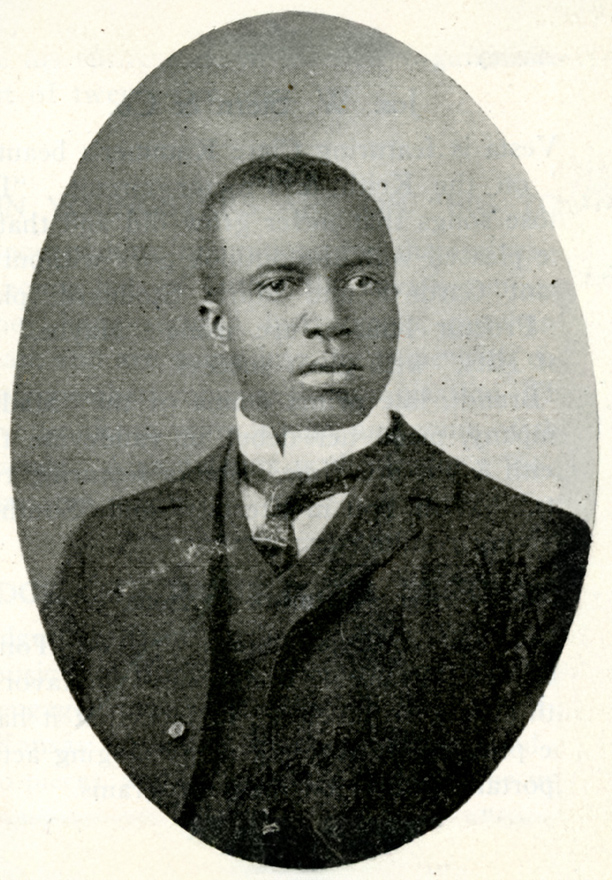
Joplin’s musical talent emerged early, and despite limited means after Joplin’s father left the family, his mother made significant sacrifices to support his education, including acquiring a piano. Joplin pursued formal musical study with unusual determination, remaining in school into his late teens and continuing his music education well into adulthood, enrolling in college in his thirties even after establishing himself as a success composer.
In his early adulthood, Joplin worked as an itinerant musician, performing wherever Black musicians could find employment—often in saloons, gambling houses, and brothels. In 1897 he settled in Sedalia, Missouri, then regarded as the center of the ragtime world.
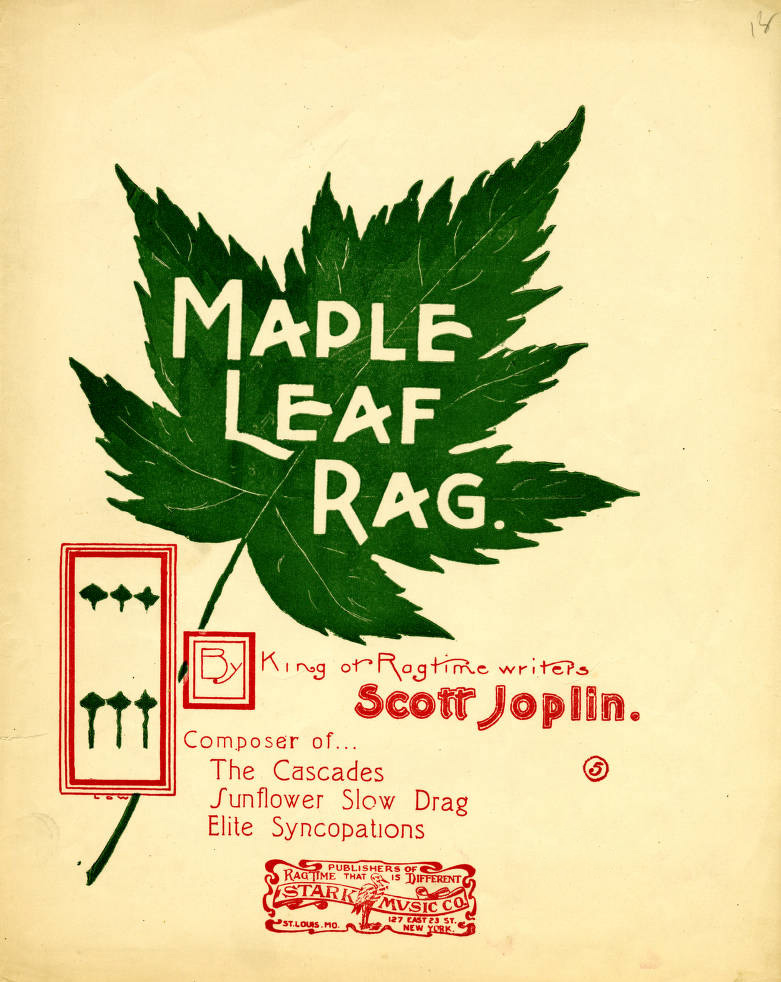
Joplin worked at a popular gambling house and bordello in Sedalia known as the Maple Leaf Club, where he composed “Maple Leaf Rag”. Published in 1899 by John Stark, the piece was initially slow to sell due to its technical difficulty, but it soon became a national success. Its popularity secured Joplin’s reputation and provided him with sustained income, aided by Stark’s unusual willingness to support Joplin through royalties rather than outright purchase.
In the years that followed, Joplin produced a substantial body of work that included rags, waltzes, marches, songs, and cakewalks. Despite his success, he grew increasingly dissatisfied with ragtime’s status as popular entertainment and sought to expand into larger forms. His first opera, A Guest of Honor (1903), was undermined by financial misfortune and is now lost. Undeterred, Joplin moved to New York City in 1907 and devoted his final years to Treemonisha, an opera that affirmed African American culture while asserting education as a path to liberation.
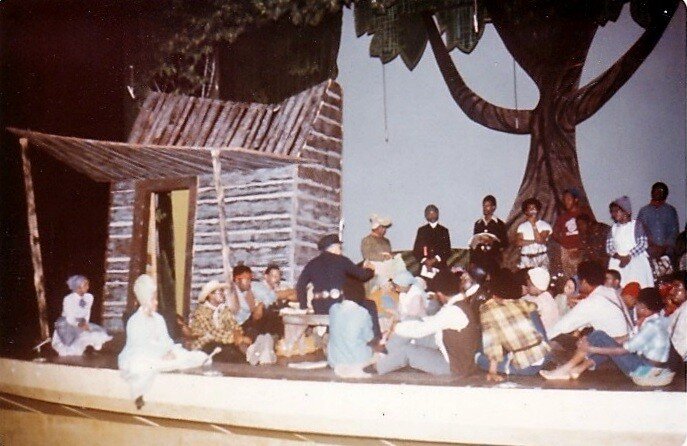
Unable to secure institutional support, Joplin financed the project himself and presented a single performance in 1915, playing the orchestral score on piano due to lack of resources. The production was ignored by critics. By 1916, declining health had begun to affect his playing, though his style was preserved in a small number of piano rolls. Poorly supported in his lifetime, Joplin died in 1917 after years of illness and financial hardship. His music would be rediscovered decades later, with Treemonisha finally receiving full productions and Joplin being posthumously awarded the Pulitzer Prize for Music for the opera in 1976.
Influences
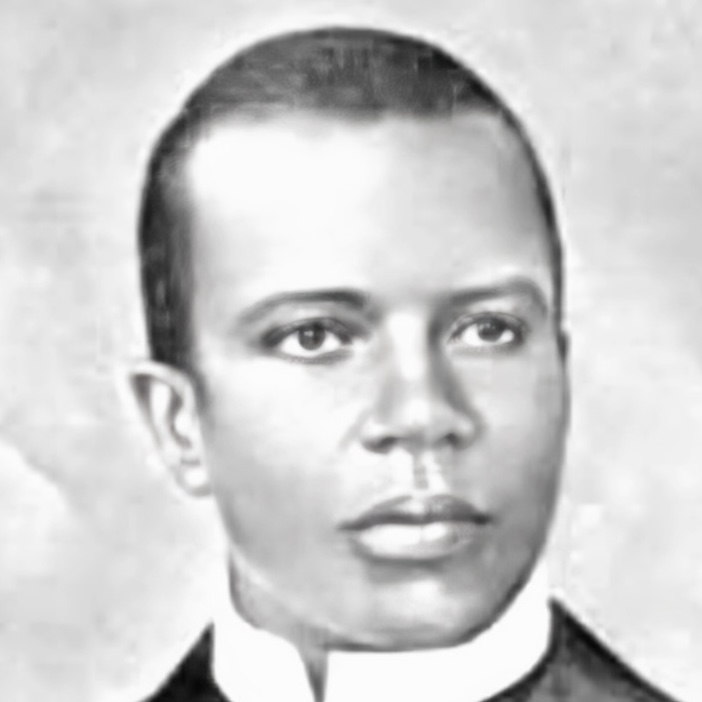 Scott Joplin
Contributions to jazz
Scott Joplin’s primary contribution to American music lies in his codification of ragtime as a fully composed, formally coherent style. By uniting African American rhythmic practices with European-derived forms, he established a musical language that was both structurally disciplined and rhythmically forward-looking. Ragtime’s emphasis on syncopation, steady pulse, and formal balance would become foundational to the development of early jazz.
Although Joplin himself was not a jazz musician, his influence on jazz was profound and indirect. Ragtime served as a critical bridge between 19th-century popular music and the emerging jazz styles of the early 20th century. Joplin’s insistence on compositional seriousness and his pursuit of large forms challenged prevailing assumptions about Black music and helped lay the groundwork for jazz to be understood as an art form rather than mere entertainment.
Contributions to jazz piano
Joplin established the piano as the central instrument of ragtime and defined a pianistic approach that shaped generations of players. His works demand rhythmic precision, independence of hands, and control rather than virtuosic speed, training pianists to balance syncopated right-hand lines against steady left-hand patterns. This approach directly influenced early jazz piano styles, particularly stride, and provided a structural and rhythmic foundation upon which jazz piano would continue to evolve.
Joplin did for the rag what Chopin did for the mazurka.
— Bill Ryerson, Best of Scott Joplin (1973)
Listen
Joplin used “Maple Leaf Rag” became an archetype from which sprang subsequent works, such as “Gladiolus Rag”, written in 1907.