Biography
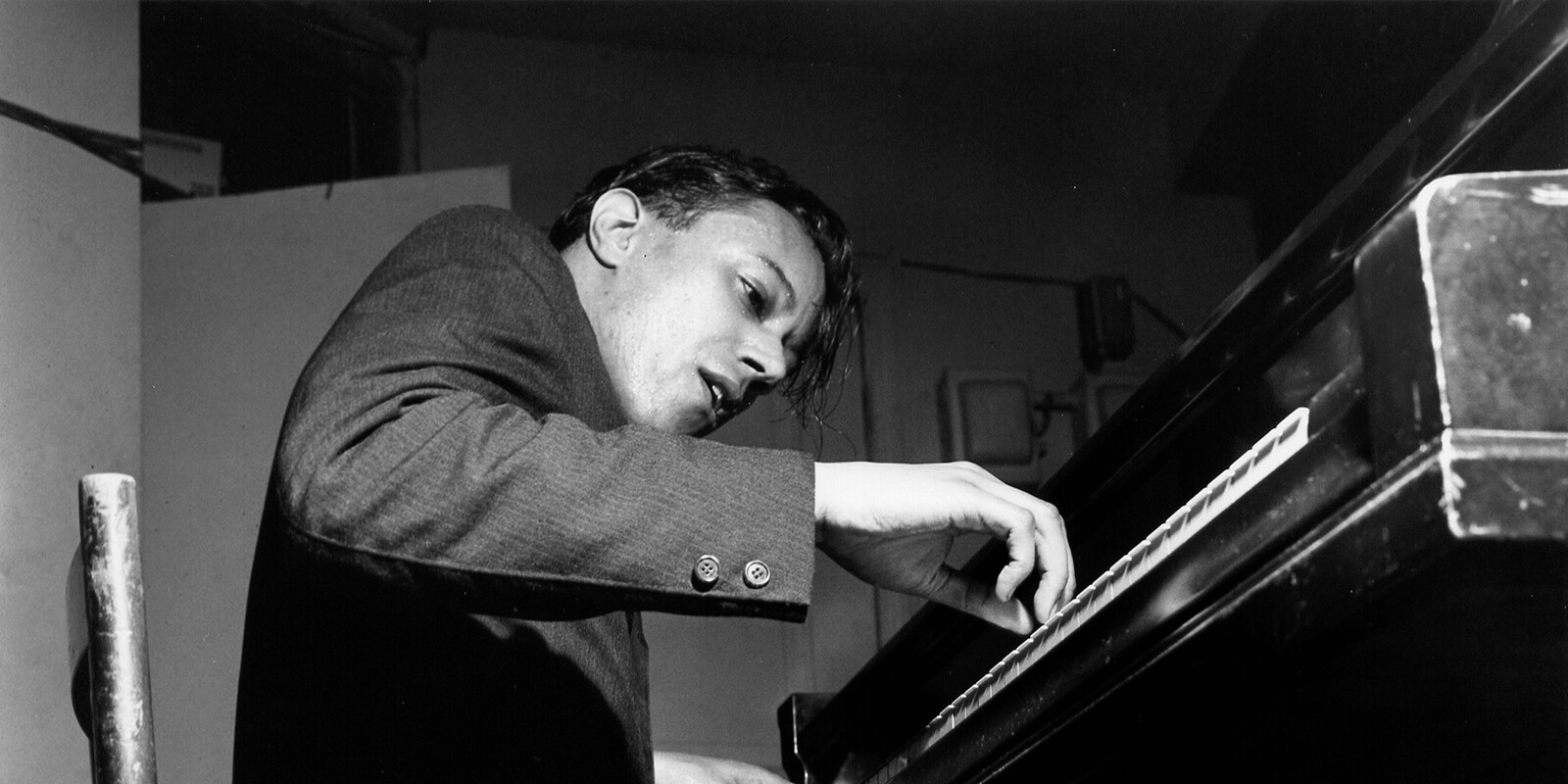
Horace Silver was born in Norwalk, Connecticut, to a Cape Verdean father and an Irish-American mother, a cultural mix that would subtly inform his rhythmic sensibility and melodic instincts. He grew up playing tenor saxophone and piano, eventually gravitating fully toward the piano as his primary voice. After studying briefly at the Hartt School, Silver moved to New York in the early 1950s, where he quickly became embedded in the city’s modern jazz scene.
Silver first gained major attention as a member of Stan Getz’s trio, but his trajectory shifted decisively when he co-founded The Jazz Messengers with drummer Art Blakey in 1954. The group became a proving ground for the emerging hard bop style, emphasizing blues feeling, gospel harmony, and rhythmic drive. Silver’s tenure with the Messengers was short but foundational, and he soon formed his own quintet, which would become one of the most influential small-group formats in jazz.
Throughout the late 1950s and 1960s, Silver led a succession of celebrated quintets featuring musicians such as Clifford Brown, Blue Mitchell, Junior Cook, Joe Henderson, and Woody Shaw. Recording primarily for Blue Note Records, he produced a body of work that balanced accessibility with sophistication. In later years, Silver increasingly focused on composition and spiritual themes, even experimenting with vocals and extended forms, while remaining a central figure in jazz history.
Influences
Contributions to jazz
Horace Silver was one of the principal architects of hard bop, a style that re-centered jazz around blues, gospel, and danceable grooves without abandoning bebop’s harmonic language. His music pushed back against what some perceived as the emotional detachment of cool jazz, instead foregrounding earthiness, humor, and communal feeling. Silver’s compositions—such as “Song for My Father,” “The Preacher,” and “Sister Sadie”—became standards precisely because they were rhythmically infectious and melodically direct.
As a bandleader, Silver helped establish the composer-led quintet as a dominant model in modern jazz. He emphasized tightly arranged ensembles, clear formal structures, and memorable themes, setting a template that would influence countless musicians and groups. His insistence on strong original material shifted expectations for jazz leaders, reinforcing the idea that composition and performance were inseparable aspects of artistic identity.
Contributions to jazz piano
Silver’s piano style rejected virtuosic display in favor of clarity, groove, and motivic economy. His touch is percussive and grounded, with repeated rhythmic figures, blues-inflected harmony, and left-hand patterns that lock tightly with the rhythm section. Rather than extended linear improvisation, Silver favored short, declarative phrases that developed over repetition and variation. His solos feel architectural: built from compact ideas, carefully paced, and immediately intelligible, even at fast tempos.
Central to this approach is Silver’s distinctive funkiness and the sharp focus of his musical vision. The sound is deliberately uncluttered—melodies are succinct and memorable, rhythms propulsive without ever becoming overbearing. The obsession with virtuosity so characteristic of bebop is almost entirely absent and, in Silver’s hands, never missed.